The Expanding Perimeter of Mobile Telemetry
Modern mobile operating systems execute hundreds of background processes, background sensor polls, and third-party advertising SDK pings every minute. For enterprise security engineers and privacy-conscious professionals, auditing mobile device telemetry requires a deep understanding of runtime sandboxes, baseband communication layers, and forensic artifact extraction.
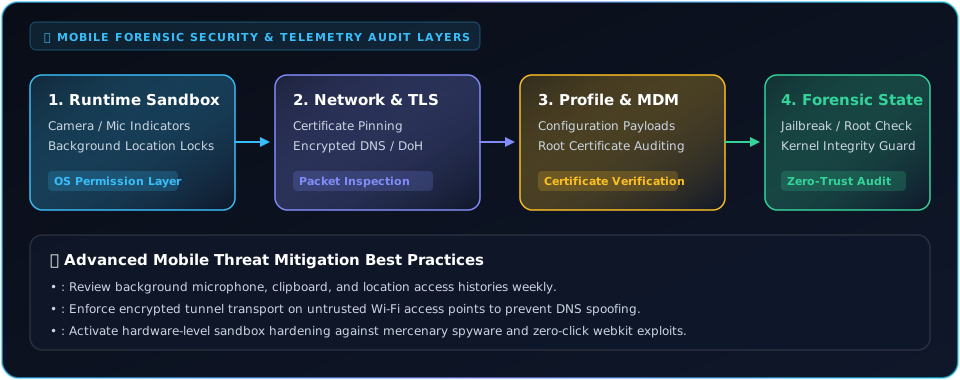
1. OS Runtime Permission Sandboxing
Both iOS (Darwin/Mach kernel) and Android (SELinux) enforce mandatory access controls (MAC) isolating application execution contexts. Key diagnostic indicators include:
- Dynamic Hardware Indicators: Visual camera (green) and microphone (orange) indicator bars managed directly by the secure enclave / OS compositor, bypassing userland hooks.
- Background Geolocation Throttling: Enforcing coarse vs fine location quantization to prevent persistent trilateration.
- Photo Library Scoping: Limiting application access to select media assets via platform file pickers rather than full filesystem grants.
2. Network Layer Inspection & TLS Pinning Diagnostics
Auditing outbound network traffic from mobile endpoints requires deploying transparent proxy gateways (such as mitmproxy or Wireshark over WireGuard loopback interfaces). Security teams evaluate three network transport invariants:
| Network Security Layer | Protocol / Tooling | Diagnostic Objective |
|---|---|---|
| Encrypted DNS (DoH / DoT) | DNS-over-HTTPS / TLS 1.3 | Prevent local network observers from logging domain lookup metadata. |
| Certificate Pinning | HPKP / Public Key Hashes | Validate that mobile apps reject unauthorized CA injection and man-in-the-middle decryption. |
| Baseband IMSI Catchers | LTE / 5G Radio Logs | Detect forced 2G cellular downgrades and unauthenticated paging requests from rogue base stations. |
3. MDM Profiles & Root Certificate Auditing
Commercial surveillance utilities and invasive enterprise monitoring suites frequently establish persistence by installing Mobile Device Management (MDM) configuration profiles (.mobileconfig) or custom Root Certificate Authorities (CAs). Verifying device integrity requires inspecting:
# Android ADB CA Verification
adb shell "ls -la /system/etc/security/cacerts/"
adb shell "ls -la /data/misc/user/0/cacerts-added/"
Any untrusted root certificates residing in the user trust store permit silent decryption of all SSL/TLS socket connections.
4. Hardened Security Countermeasures
To defend mobile devices against commercial spyware (Pegasus, Predator) and aggressive ad-tech trackers, security practitioners enforce the following configuration standards:
- Apple Lockdown Mode / Android Strict Mode: Disables JIT JavaScript compilation, blocks complex web fonts, and rejects incoming message attachment previews.
- Regular Cold Reboots: Non-persistent zero-click memory implants are cleared upon system restarts, forcing adversaries to re-exploit.
- SIM PIN & eSIM Security: Lock physical SIM slots and carrier porting requests with biometric verification to neutralize SIM-swap identity theft.